








How to Style Gothic Jewellery: A Layering Guide
Styling gothic jewellery isn't the same as styling generic chains. The pieces carry more visual weight, the symbolism matters, and the difference between a considered look and a cluttered one is narrower. Done well, a gothic stack reads as intentional and personal. Done badly, it reads as a costume box emptied onto one neckline.
This guide covers the actual mechanics — the lengths, the weights, the metal mixing, the layering rules — plus how to combine different gothic strands without the look falling apart, and how to make heavier pieces work in everyday and professional settings.
Core Principles
Four principles underpin every good gothic stack. Get these right and the specifics take care of themselves.
Vary the Length
Spacing is the foundation of layering. Leave a gap between each piece so every layer sits in its own space rather than tangling with the one above it. Traditional guides talk in fixed numbers — a 14 inch choker, a 16 inch chain, an 18 inch pendant — but that framework assumes everyone has the same neck, which isn't how real bodies work. The number that fits one person sits completely differently on another.
We size for fit instead. Our chokers come in small (11 inches), medium (13 inches), and large (15 inches), each with a 4 inch adjustable extender, so you set the fit rather than forcing your neck to match a fixed length. The principle still holds — stagger your pieces so each one is visible — but the extender does the spacing work for you. Lengthen one piece, shorten the next, and you build the graduated look on your own proportions rather than someone else's chart.
 Vary the Weight
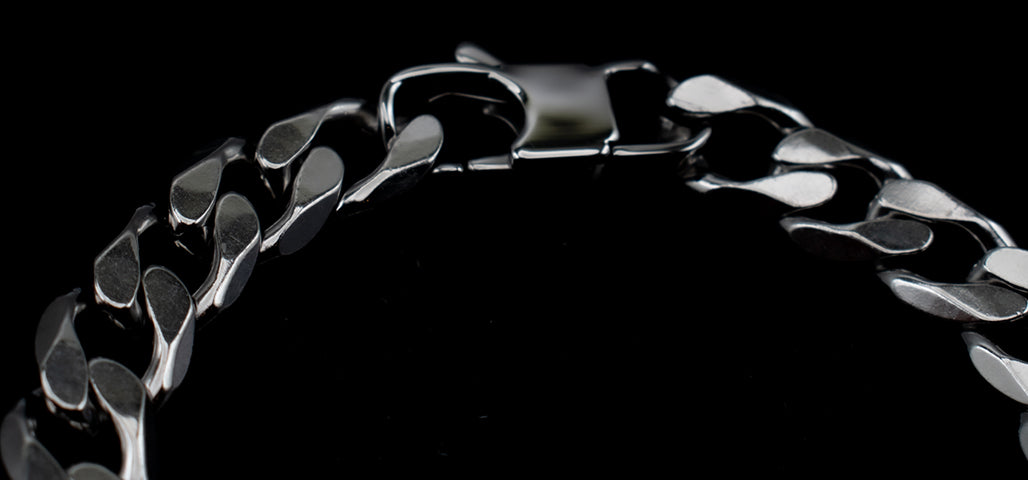
Gothic jewellery lives on contrast between heavy and fine. A stack made entirely of chunky chains looks like armour with no detail; a stack made entirely of dainty chains loses the gothic weight that makes it read as gothic at all. Mix a substantial chain with finer pieces so each one sets off the others. A heavy Cuban choker against a thin cable chain with a small cross pendant is more interesting than three medium chains of similar gauge.
Vary the Texture
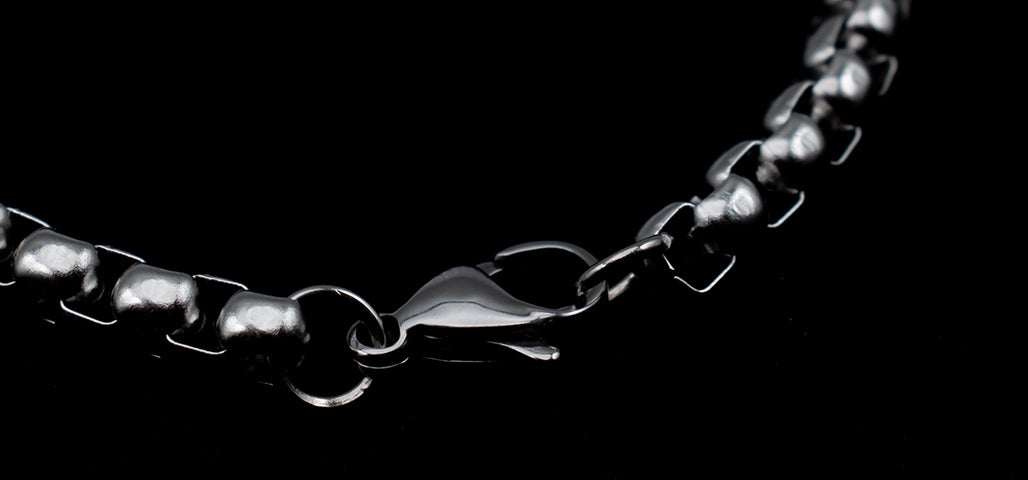
Different chain styles catch light differently, and that contrast is what makes a stack look curated rather than flat. A flat snake or herringbone chain next to a textured Figaro or box chain creates visual friction. This is where plain chains earn their place in a gothic stack — a simple high-shine chain provides the smooth counterpoint that makes a textured or pendant-heavy piece stand out.
Decide on Metal
You have two valid approaches. Tonal — all silver or all gold — gives a cleaner, more deliberate look and suits trad goth and minimalist gothic styling. Mixed metal — silver and gold together — reads as more modern and relaxed, and works well for dark romance and witchy strands. Both are correct; what doesn't work is an accidental mix where it looks like you grabbed whatever was nearest rather than choosing.
Layering Necklaces
Necklaces are where gothic layering does most of its work, and where most people get it wrong by piling on without thinking about how the pieces sit together.
The Three-Layer Formula
The most reliable gothic necklace stack uses three pieces at staggered lengths, each with room to breathe:
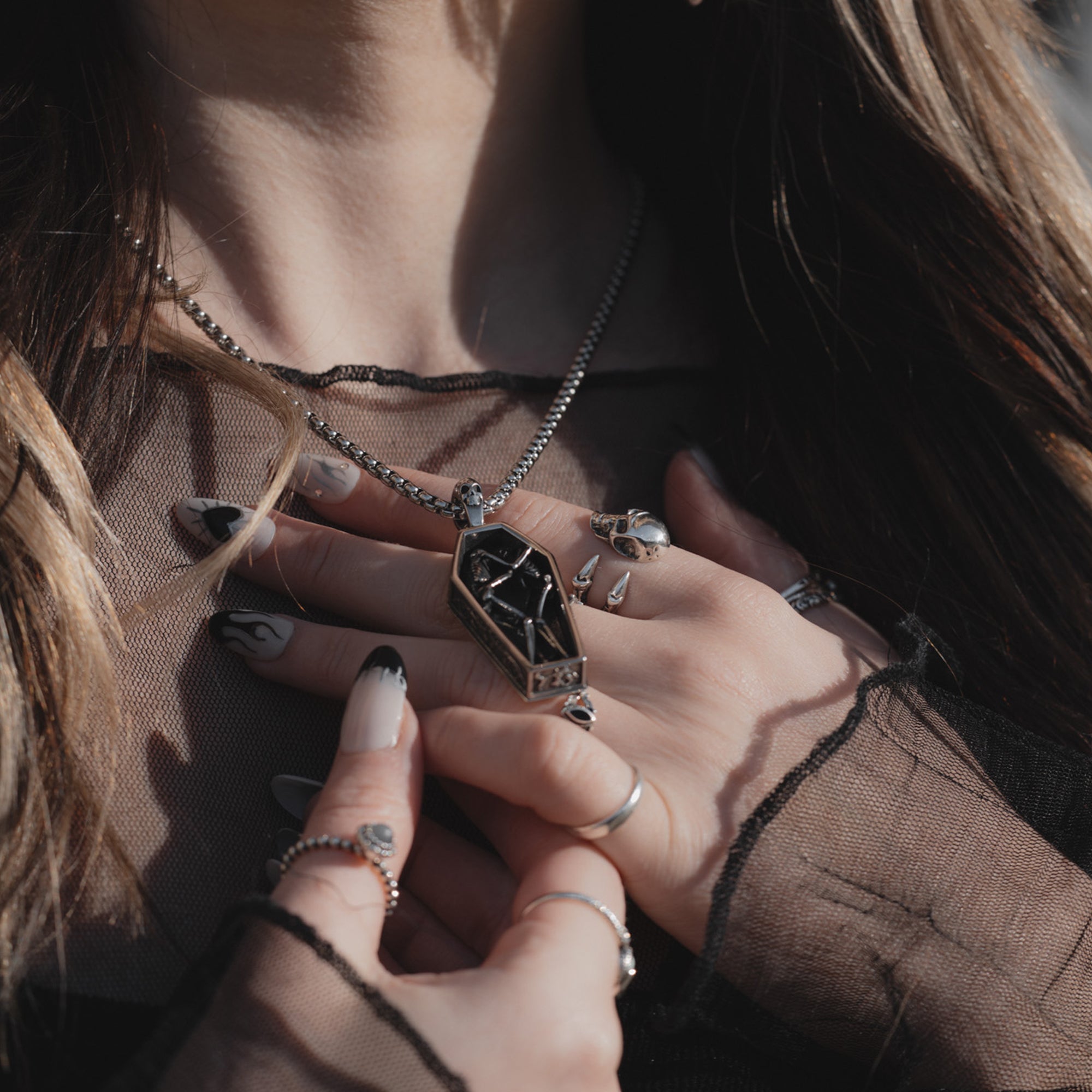
The choker. Sits highest, at the throat, and anchors the stack. This is the piece that signals "gothic" most immediately — a velvet band, a chain choker, an O-ring, or a spiked piece. Sized to fit (small, medium, or large) and fine-tuned with its 4 inch extender, so it sits exactly where you want it. Our choker range and plain chain chokers both work as the base, depending on whether you want the anchor to be the statement or the supporting piece.
The mid-layer. Sits at the collarbone, bridging the choker and the longest piece. Usually a chain — plain or with a small pendant. A plain chain from our chain necklaces range works perfectly here; its job is to add a layer without competing with the focal pieces above and below.
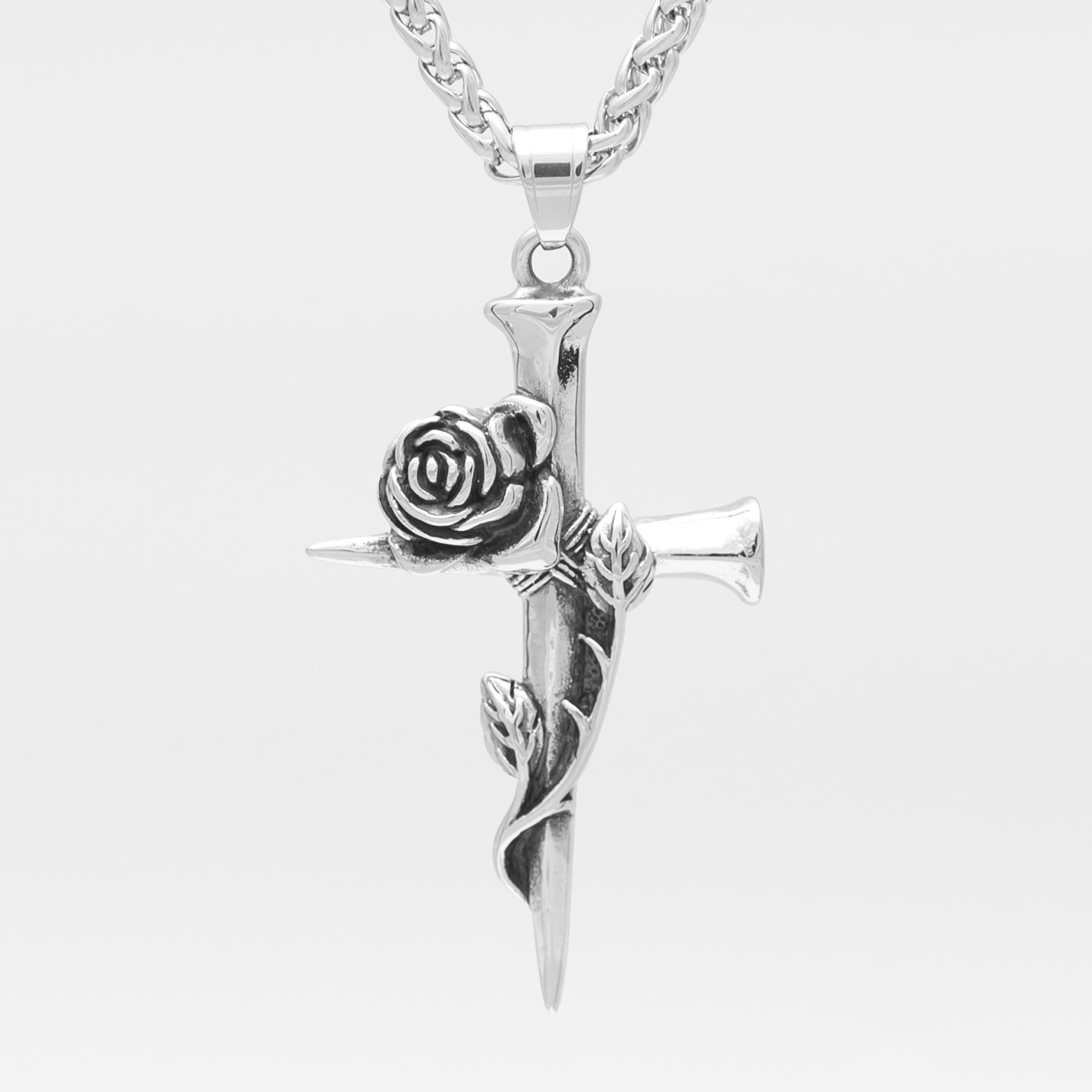
The pendant. Sits lowest, below the collarbone, carrying the focal piece — a cross, a skull, a rose, a locket. This is where the symbolic weight of the stack usually lives. Browse gothic necklaces for pendant pieces.
Our necklaces run from 35cm right up to 90cm, every one with an optional 4 inch extender, so you can build a staggered stack that fits your frame rather than buying three fixed lengths and hoping they sit right. Set the gaps yourself; the same three-piece formula works on any neck.
Two-Layer Stacks
If three feels like too much, a two-piece stack is cleaner and easier to wear daily. The reliable combination is a choker plus a single longer pendant, with a clear gap between them. This keeps the gothic signal of the choker while letting one pendant do the symbolic work.
Neckline Matters
Your top dictates the stack. High necklines suit longer single pendants that sit on the fabric. Open and V-necklines are made for layering — they give the stack room to sit against skin rather than fabric. Off-shoulder and boat necks pair best with chokers and shorter pieces that frame the neck. A heavy layered stack against a high crew neck usually looks crowded; the same stack against a V-neck looks deliberate.
Stacking Bracelets
Bracelets are the most forgiving place to experiment, because the stakes are lower and the wrist hides minor mismatches the neckline would expose.
The same weight-contrast principle applies: pair a chunky chain with finer pieces rather than stacking three identical bracelets. A heavy Cuban or curb chain alongside a thin cable bracelet and a single charm or pendant bracelet gives texture without bulk. Plain chains from our chain bracelets range are ideal stack-fillers — they add layers and metal without pulling focus from a statement piece.
Fit matters on the wrist too. Our bracelets run from 16cm to 22cm, each with an optional 4cm extender, so a stack sits comfortably rather than one piece gaping while another grips. For a gothic wrist specifically, mixing in one symbolic piece — a cross charm, a skull bracelet, an O-ring — gives the stack its identity. The rest can be plain chain doing supporting work. See gothic bracelets for statement pieces, or keep it minimal with a single chunky chain and nothing else.
Choosing Earrings
Earrings split into two approaches, and the mistake is trying to do both at once.
Statement earrings. Large hoops, crosses, drops, or dangles. One bold pair worn alone, with the rest of the look kept simple. Statement earrings do their own work and don't need stacking.
Curated stacks. Multiple smaller studs and huggies across one or both ears, building a collected, layered ear. This works best with a second or third piercing and reads as considered rather than loud.
Mixing the two — a large statement drop alongside a stacked ear of small studs — usually fights itself. Pick a direction per look. Browse gothic earrings for both statement and stud options.
Mixing Gothic Strands
The pillar guide covers the different aesthetic strands — trad goth, dark romance, witchy, punk — in detail. Styling across them is possible but takes care. (For the full breakdown of each strand, see our complete guide to gothic jewellery.)
Trad goth and dark romance combine well. A heavy silver cross (trad goth) softened with a small rose pendant (dark romance) reads as a coherent dark aesthetic. The weight of one balances the delicacy of the other.
Witchy and dark romance combine well. Crescent moons, stars, and fine chains sit comfortably alongside roses and lockets — both strands favour finer, more decorative pieces.
Punk and dark romance is the hardest mix. Heavy spikes and studs against delicate floral pieces can clash unless one is clearly dominant. If you want to combine them, let one strand lead and use the other as a single accent rather than splitting the look 50/50.
The general rule: two strands maximum per look, with one clearly leading. Three or more and the look loses focus.
Day-to-Night and Professional Settings
Heavy gothic jewellery doesn't always suit a meeting room, but the aesthetic doesn't have to be abandoned for work. The trick is scaling down rather than switching off.
For professional settings, lead with the finer end of your collection — a dainty silver cross, a small pendant on a thin chain, a single subtle choker. The symbolism stays; the volume drops. Save the oversized crucifix and the spiked choker for evenings and weekends. Many wearers build their collection specifically around this split: a set of fine daily pieces and a set of heavier statement pieces, mixed as the occasion allows.
The pieces that transition best are the ones in non-tarnish stainless steel and gold plating, because they survive constant wear — on through the workday, the commute, the evening, without coming off. A piece you never have to remove becomes part of how you dress rather than an accessory you manage.
Three Perspectives on Styling Gothic Jewellery
Vee, layering enthusiast, Leeds
"My everyday stack is three necklaces — a thin chain choker, a plain mid-length chain, and a cross pendant lower down. It took me ages to work out that the spacing was the whole game. Once I started using the extenders to set proper gaps between the layers, everything looked ten times better. Before that I was just tangling three chains together and wondering why it looked messy."
Dorian, trad goth, Cardiff
"I keep my metals tonal — everything silver, no gold. For the trad goth look I think mixing metals dilutes it. I want heavy, cold, all-silver. One big cross, a chunky chain, done. The restraint is what makes it read properly rather than looking like I've thrown everything on at once."
Indira, dark romance, Bristol
"I mix gold and silver deliberately — a gold rose pendant with a fine silver chain choker. For dark romance the mixed metal feels softer and more romantic than strict tonal. I layer fine pieces only; nothing heavy. The whole look is delicate rather than armoured, which suits the aesthetic I'm going for."
Mistakes to Avoid
A few quick corrections that fix most styling problems:
Lengths too close together. The most common error. If two necklaces sit at nearly the same point they tangle and compete. Use the extenders to stagger them so each has its own space.
Everything the same weight. All-chunky reads as heavy and undifferentiated; all-dainty loses the gothic weight. Contrast is the point.
Too many statement pieces. Multiple oversized pendants fight each other. One focal piece per stack, with the rest supporting it.
Accidental metal mixing. Mixing metals is fine when deliberate. The problem is when it looks unintentional. Commit to tonal or commit to mixed.
Forcing every piece to be symbolic. A stack where every chain carries a skull, a cross, and a pentagram is exhausting to look at. Let plain chains do supporting work so the symbolic pieces have room to land.
Where to Start
If you're building a gothic stack from scratch, start with the foundation pieces rather than the statement ones: a choker, a plain mid-length chain, and one pendant. That three-piece base teaches you the spacing and the weight contrast, and you can add or swap pieces from there. The plain chains do more work than people expect — they're the structure the statement pieces hang from.
Build your base from our plain chain necklaces and plain chain chokers, then add focal pieces from the gothic jewellery range. For the meaning behind the symbols you'll be layering — the skulls, crosses, and roses — see our guide to memento mori jewellery.