





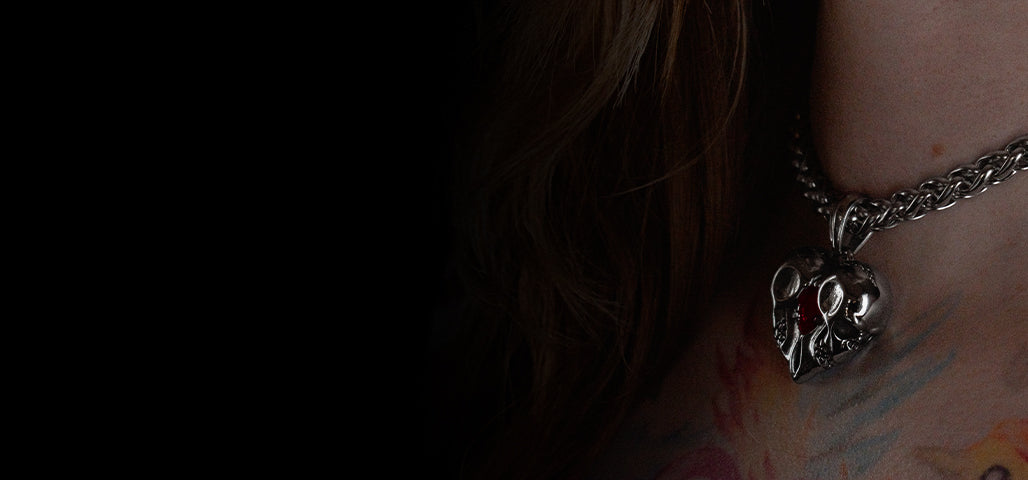
Artikel: Der moderne Leitfaden zu Gothic-Schmuck | Geschichte, Symbole & Styling

Der moderne Leitfaden zu Gothic-Schmuck | Geschichte, Symbole & Styling
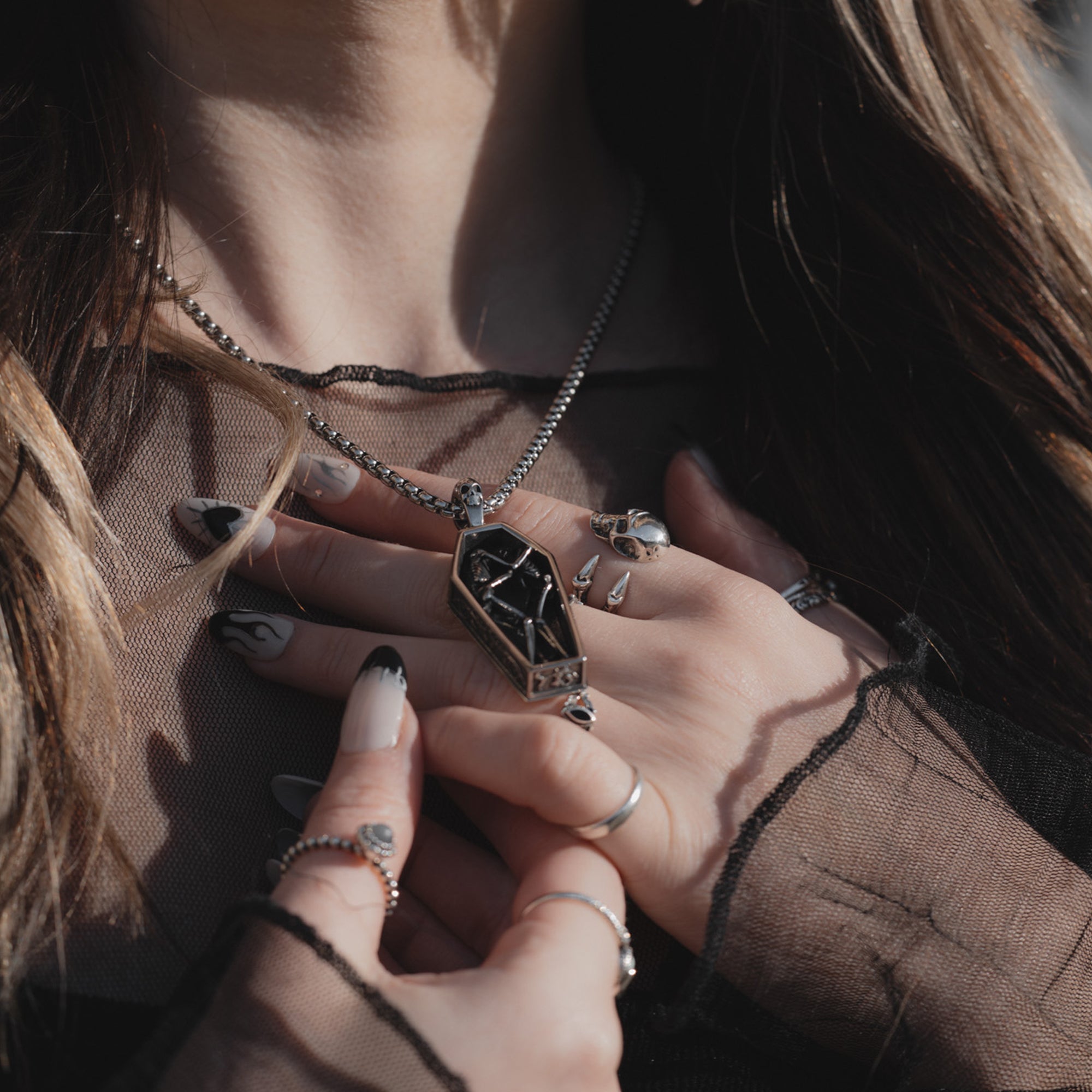
Gothic-Schmuck ist eine Kategorie, die weniger durch ein einzelnes Material oder eine Technik definiert ist, sondern vielmehr durch ihre Ursprünge – viktorianische Trauertraditionen, religiöse Ikonographie, Punk-Subkultur und eine lange visuelle Geschichte des Memento Mori. Er umfasst alles von zarten Sterlingsilberkreuzen bis zu schweren, stacheligen Halsbändern, von zierlichen Halbmonden bis zu überdimensionierten Totenkopfringen.
Was ihn eint, ist die Absicht. Gothic-Schmuck behandelt Dunkelheit, Tod, Romantik und Rituale als legitime Themen. Die Stücke sind dekorativ, aber sie sind nicht nur Dekoration – sie verweisen auf Traditionen, die diese Themen ernst nahmen, und sie werden von Menschen getragen, die das immer noch tun.
Dieser Leitfaden behandelt, woher Gothic-Schmuck kommt, die Kernsymbole, denen Sie begegnen werden, die verschiedenen ästhetischen Strömungen innerhalb der breiteren Gothic-Kategorie und wie man tatsächlich eine Garderobe mit Stücken aufbaut, die im Alltag funktionieren.
Eine kurze Geschichte des Gothic-Schmucks
Die visuelle Sprache des modernen Gothic-Schmucks hat drei Hauptwurzeln, und die meisten zeitgenössischen Stücke schöpfen aus mindestens einer davon.
Viktorianischer Trauerschmuck
Die viktorianische Ära formalisierte das, was wir heute als Gothic-Schmuck bezeichnen. Nach Prinz Alberts Tod im Jahr 1861 trat Königin Victoria in eine öffentliche Trauerperiode ein, die Jahrzehnte dauerte, und Trauerkleidung – einschließlich Schmuck – wurde zu einer strukturierten sozialen Praxis. Gagat (ein versteinertes Holz aus Whitby), Vulkanit und Onyx dominierten, geschätzt für ihre mattschwarzen Oberflächen. Medaillons mit Haaren des Verstorbenen, Miniaturen von Memento-Mori-Inschriften und Broschen mit Totenkopf- oder Sargmotiven waren eher Standard als transgressive.
Diese Periode gab dem Gothic-Schmuck einen Großteil seines symbolischen Kernvokabulars: den Totenkopf, das Kreuz, die Sanduhr, die Urne und die Verwendung von schwarzen Steinen und dunklen Metallen, um Gewicht und Ernsthaftigkeit zu signalisieren.
Religiöse und Andachtstradition
 Kreuze, Kruzifixe, Rosenkränze und Anhänger im Reliquien-Stil stammen aus einer viel älteren Tradition. Mittelalterlicher und Renaissance-christlicher Andachtsschmuck zeigte oft grafische Darstellungen von Leid, Tod und dem Körper – Themen, die die Gothic-Mode später aufgriff und neu interpretierte. Der moderne überdimensionale Kreuzanhänger zieht eine direkte Linie zu dieser Andachtsgeschichte, selbst wenn er völlig außerhalb eines religiösen Kontexts getragen wird.
Punk und Post-Punk
Ab den späten 1970er Jahren kamen Spikes, Nieten, Sicherheitsnadeln und schwere Ketten ins visuelle Repertoire. Punks Beitrag war strukturell – physisches Gewicht, Beschläge, das Gefühl, dass Schmuck eine Rüstung sein könnte. Post-Punk und die frühe Goth-Szene der 1980er Jahre verbanden dies mit der viktorianischen Trauerästhetik und schufen die Version des Gothic-Schmucks, die die meisten Menschen heute kennen: schwere Ketten, Kreuze, Totenköpfe, dunkle Steine und eine Betonung von Substanz statt Zartheit.
Moderner Gothic-Schmuck liegt an der Schnittstelle aller drei Traditionen. Ein Totenkopfanhänger im Jahr 2026 trägt die viktorianische Memento-Mori-Tradition, die mittelalterliche andächtige Betonung des Körpers und die Punk-Betonung von Gewicht und Präsenz – alles gleichzeitig.
Die Kernsymbole
Die meisten Gothic-Schmuckstücke greifen auf eine kleine Auswahl wiederkehrender Symbole zurück. Zu verstehen, worauf jedes Symbol verweist, macht es einfacher, Stücke auszuwählen, die Ihnen etwas bedeuten, anstatt nur gut auszusehen.
Das Kreuz und Kruzifix
Das beständigste Symbol im Gothic-Schmuck und das mit der größten Bandbreite an Interpretationen. Getragen als religiöse Andacht, als kulturelle Referenz, als viktorianisches Gothic-Literatur-Symbol oder einfach als starker visueller Anker. Das Kruzifix speziell – ein Kreuz mit der Figur Christi – hat ein größeres Andachtsgewicht als ein schlichtes Kreuz. Stöbern Sie in unserer Kreuz- und Kruzifix-Kollektion für die gesamte Auswahl.
Der Totenkopf
Das klarste Memento-Mori-Symbol.

Totenkopfschmuck wird seit mindestens 500 Jahren als Erinnerung an die Sterblichkeit getragen, ursprünglich in explizit religiösen Kontexten (Vanitas-Gemälde, Andachtsringe mit der Inschrift „Memento Mori“) und später als säkulare philosophische Referenz. Im modernen Gothic-Schmuck funktioniert der Totenkopf als alles von einem kleinen detaillierten Anhänger bis zu einem überdimensionierten Statement-Ring. Für einen tieferen Einblick in die Symbolik siehe unseren vollständigen Leitfaden zu Memento-Mori-Schmuck und seiner modernen Bedeutung. Siehe die gesamte Totenkopfschmuck-Kollektion.
Die Rose
Rosen stehen im Mittelpunkt des romantischen Strangs des Gothic-Schmucks. Historisch assoziiert mit Venus, Liebe, Geheimnis (sub rosa) und – wenn mit Dornen gepaart – mit dem Heiligen Herzen und der Passion. Im Gothic-Schmuck erscheinen sie oft zusammen mit Kreuzen, Totenköpfen oder Dolchen und signalisieren die dunkelromantische Kombination aus Schönheit und Schmerz. Entdecken Sie Rosenschmuck.
Die Schlange
Eines der ältesten Symbole im Schmuck, das von den Römern, Griechen und Ägyptern lange vor der Übernahme durch die Gothic-Mode verwendet wurde. Schlangen tragen Dualität – Weisheit und Gefahr, Heilung und Gift, Ewigkeit (der Ouroboros) und Versuchung. Im Gothic-Schmuck wird die Schlange eher als schützend und wissend denn als bedrohlich wahrgenommen. Siehe unsere Schlangenschmuckstücke.
Spikes und Nieten
Spikes sind das Punk-Erbe. Sie fungieren als Rüstung, als Warnung, als Ablehnung von Weichheit. Ein Spiked-Choker oder ein Nietenohrring wirkt schützend, selbst wenn er dekorativ getragen wird, und bleibt eines der stärksten visuellen Signale in der Gothic-Kleidung. Stöbern Sie in gespikten Stücken.
Himmlische Symbole
Monde, Sterne, Sonnen und Augen gehören zum witchy Strang des Gothic-Schmucks, mit Wurzeln in okkulten und esoterischen Traditionen. Der Halbmond ist mit der Göttin und der Intuition verbunden; das Pentagramm mit elementarer Balance; das Auge mit Schutz und Sicht. Diese Symbole erscheinen tendenziell in feineren, zarteren Stücken als die schwereren Totenkopf- oder Kreuzdesigns.
Die ästhetischen Strömungen
Gothic-Schmuck ist kein einheitlicher Look. Innerhalb der breiteren Kategorie haben sich mehrere unterschiedliche ästhetische Strömungen entwickelt, jede mit ihren eigenen visuellen Regeln. Für die vollständige Aufschlüsselung der Ästhetik siehe unseren Leitfaden zu Dark-Romance-Schmuck.
Trad Goth
Die Post-Punk-Vorlage der 1980er Jahre. Schweres Schwarz, silberne Beschläge, große Kreuze, Ketten und dunkle Steine. Die Stücke sind substanziell, oft geschichtet und wirken bewusst gothic statt unauffällig. Trad Goth-Schmuck priorisiert Gewicht und grafische Wirkung.
Dark Romance
Weicher als Trad Goth, mehr aus der viktorianischen Gothic-Literatur (Brontë, du Maurier, Poe) und aus der zeitgenössischen Dark-Romance-Belletristik schöpfend. Rosen, Herzen, Medaillons, Kreuze mit floralen Details und feinere Ketten. Kombiniert oft Gothic-Symbolik mit zarter Handwerkskunst – ein zierliches Silberkreuz statt eines überdimensionalen, ein kleiner Rosenanhänger statt eines schweren Blumenstücks.
Witchy und Himmlisch
Monde, Sterne, Augen, Pentagramme, Ankhs und andere esoterische Symbole. Im Allgemeinen feiner und dekorativer als Trad Goth, oft in Silber, und lässt sich gut mit nicht-gothischen zarten Stücken kombinieren. Der Witchy-Strang ist in den letzten Jahren rasant gewachsen, teils durch TikTok und teils durch ein breiteres kulturelles Interesse an Tarot, Astrologie und okkulten Traditionen.
Punk und Alternative
Der hardwarelastige Strang. Spikes, klobige Ketten, Nieten, Vorhängeschlösser und industrielle Oberflächen. Stilistisch näher am Streetwear, oft unisex, und betont Masse und Präsenz über Raffinesse.
Okkult und Esoterisch
Der spezifischste Strang, der aus Zeremonialmagie, Alchemie und religiöser Symbolik jenseits des Mainstream-Christentums schöpft. Umfasst Ankhs, Sigillen, Ouroboros-Designs und Referenzen zu hermetischen und thelemischen Traditionen. Überschneidet sich oft mit witchy und himmlischen Stücken.
Materialien im Gothic-Schmuck
Die meisten Gothic-Schmuckstücke werden aus einem von drei Materialien hergestellt, jedes mit praktischen Auswirkungen auf das Tragegefühl.
Silber und Edelstahl
Silber ist das traditionelle Gothic-Metall – es passt zu dunklen Steinen, nimmt Oxidation gut an (was den leicht angelaufenen Look ergibt, der zur Gothic-Ästhetik passt) und wirkt kühltonig und substanziell. Edelstahl erzielt den gleichen visuellen Effekt mit besserer Haltbarkeit. Alle unsere Silberstücke werden aus 316L Edelstahl gefertigt, der nicht anläuft, wasserabweisend und für die meisten Träger hypoallergen ist – das bedeutet, Sie können damit duschen, schwimmen und schwitzen, ohne dass die Oberfläche beschädigt wird.
Gold
Gothic-Schmuck aus Gold ist eine neuere Entwicklung. Er funktioniert besonders gut für Dark-Romance- und Witchy-Stränge, wo der wärmere Ton die Symbolik mildert. Unsere goldenen Gothic-Stücke sind 18 Karat vergoldet über 316L Edelstahl, was die Goldoberfläche ohne den hohen Preis oder das Anlauf-Risiko von massivem vergoldetem Messing bietet.
Leder und Stoff
Speziell für Choker und Halsbänder bleiben Leder und Samt wichtige Materialien. Sie haben ein anderes Gewicht als Metall – weicher auf der Haut, offensichtlich texturierter – und werden tendenziell für Stücke mit einer stärker bondage-beeinflussten oder viktorianisch-revivalistischen Ästhetik verwendet.
Drei Perspektiven zum Tragen von Gothic-Schmuck
Um den Leitfaden abzurunden, hier drei Perspektiven von Trägern, was Gothic-Schmuck für sie in der Praxis bedeutet.
Mara, Dark Romance Trägerin, Manchester
„Ich kam durchs Lesen zum Gothic-Schmuck – Brontë, Daphne du Maurier und später Anne Rice. Ich wollte Stücke, die sich anfühlten, als gehörten sie zu dieser Welt, aber ich arbeite im Büro und kann kein fünfzehn Zentimeter großes Kruzifix zu einem Meeting tragen. Ich habe meine Kollektion langsam um feinere Stücke aufgebaut – ein zierliches Silberkreuz, ein kleiner Rosenanhänger, ein dünner Kettenchoker. Zusammen gelesen wirken sie eindeutig gothic, aber einzeln ist jedes subtil genug, um es überall zu tragen.“
Joel, Trad Goth, Brighton
„Ich bin seit Anfang der 90er Teil der Szene. Für mich ging es beim Gothic-Schmuck immer um Gewicht – physisch und symbolisch. Ich trage fast jeden Tag ein schweres Silberkreuz an einer klobigen Kette. Die Kette hat eine echte Masse, das ist wichtig. Es ist keine Dekoration. Es ist etwas, das ich trage, weil es etwas bedeutet.“
Sasha, Witchy Strand, Glasgow
„Meine Stücke sind hauptsächlich himmlisch – Halbmonde, Sterne, ein kleines Ankh, das ich seit Jahren habe. Ich bin in keinem traditionellen Sinne religiös, aber die Symbole sind mir wichtig. Ich mag, dass Gothic-Schmuck es einem ermöglicht, solche Bedeutungen mit sich zu tragen, ohne eine Performance daraus zu machen. Die Leute bemerken, dass die Stücke ungewöhnlich sind, aber sie lesen sie nicht immer als Gothic, was ich bevorzuge.“
So bauen Sie eine Gothic-Schmuck-Garderobe auf
Der Aufbau einer funktionierenden Kollektion bedeutet, darüber nachzudenken, was Sie tatsächlich täglich tragen, anstatt was in einem Flat Lay beeindruckend aussieht. Ein paar praktische Prinzipien:
Beginnen Sie mit einem starken Stück
Ein einzelnes Ankerstück – ein substanzieller Kreuzanhänger, ein Totenkopfring, ein Choker – etabliert die Ästhetik. Alles andere können Sie darum herum aufbauen. Zehn zierliche Stücke auf einmal zu kaufen, führt tendenziell zu einer Kollektion, die nicht klar wirkt. Ein starkes Stück gibt der Garderobe ein Zentrum.
Halsketten bewusst schichten

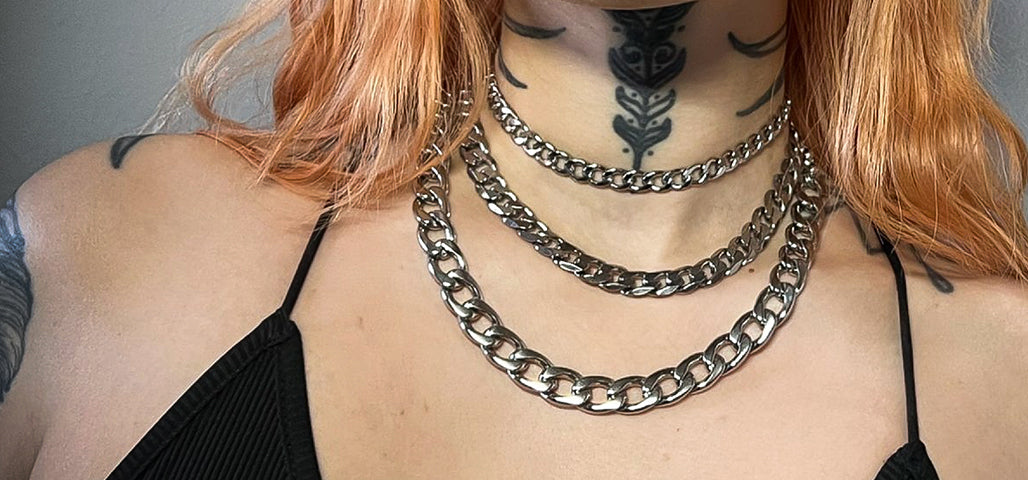
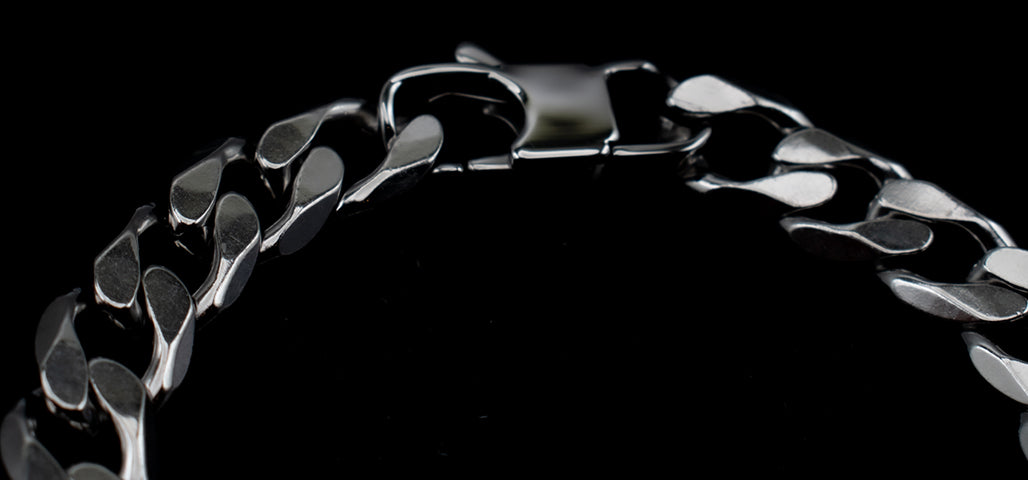
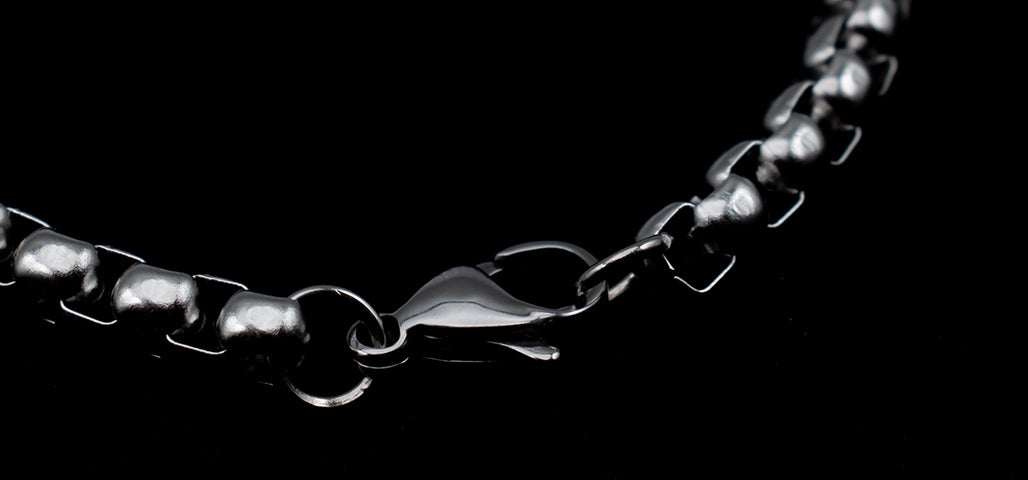
Gothic-Layering funktioniert am besten mit unterschiedlichen Kettenlängen und unterschiedlichen Gewichten. Eine gängige Formel: ein Choker oder eine kurze Kette am Schlüsselbein, ein mittelgroßer Anhänger (Kreuz, Totenkopf, Rose) und gelegentlich ein längeres Stück mit einem einzelnen kleinen Charm. Das Mischen von Kettenstilen – Cuban mit Kabel, Figaro mit Box – sorgt für visuelles Interesse. Unsere Gothic-Halsketten und Choker eignen sich gut als Basis für einen Stack.
Armband-Stack aufbauen
Armbänder sind der einfachste Ort, um Gothic mit Nicht-Gothic zu mischen. Ein schweres Kettenarmband neben feineren Stücken oder ein klobiger Cuban-Stil mit einem dünnen Kabel verleiht dem Stack Textur. Siehe Gothic-Armbänder für die Auswahl.
Ohrringe: Eine Richtung wählen
Gothic-Ohrringe teilen sich in Statement-Stücke (große Creolen, Kreuze, Hänger) und kuratierte Stacks kleinerer Stecker. Beide Richtungen funktionieren; das Mischen im selben Outfit meist nicht. Stöbern Sie in Gothic-Ohrringen.
Pflege und Langlebigkeit
Der Vorteil von 316L Edelstahl und 18 Karat Vergoldung gegenüber traditionellen Gothic-Materialien ist, dass die Stücke den täglichen Gebrauch überstehen. Sie müssen sie nicht zum Duschen, Schwimmen oder Sport abnehmen. Gelegentliches Abwischen mit einem weichen Tuch hält die Oberfläche glänzend. Vermeiden Sie abrasive Reinigungsmittel bei vergoldeten Stücken.
Für die vollständige Aufschlüsselung von Längen, Gewichten und Metallmischungen siehe unseren Leitfaden zum Styling von Gothic-Schmuck.
Wo man anfangen sollte
Gothic-Schmuck belohnt langsames Vorgehen. Die Stücke sammeln mit der Zeit Bedeutung – sowohl weil die Symbole ihre eigene Geschichte tragen als auch weil man eine persönliche Beziehung zu den Stücken aufbaut, die man täglich trägt.
Wenn Sie eine Kollektion beginnen, fangen Sie mit einem einzelnen Stück in der Strömung an, die zu Ihnen passt: ein substanzielles Kreuz oder ein Totenkopf für Trad Goth, eine zierliche Rose oder ein Kreuz für Dark Romance, ein Halbmond oder Ankh für Witchy. Fügen Sie im Laufe der Zeit Schichtstücke hinzu. Die Kollektion wird klarer wirken, als wenn Sie an einem Wochenende zehn Stücke kaufen.
Weitere Informationen zur Geschichte und Bedeutung der Symbole finden Sie in unserem ausführlicheren Leitfaden zu Memento-Mori-Schmuck – die Tradition hinter Gothic-Totenköpfen und -Kreuzen.
Stöbern Sie in der vollständigen Gothic-Schmuckkollektion, um zu beginnen, oder entdecken Sie die Strömung, die zu Ihnen passt.