






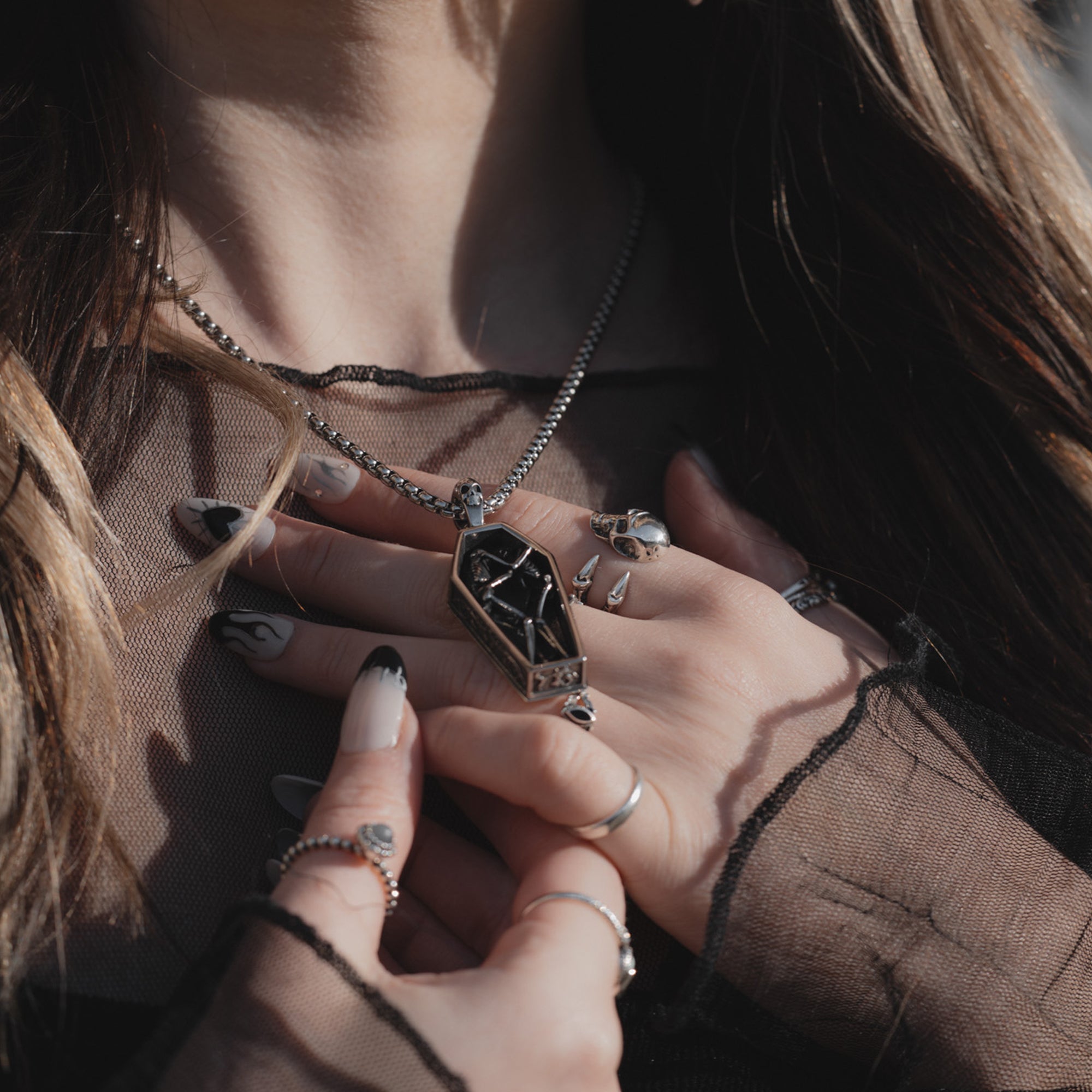
Memento Mori Schmuck: Symbolik und moderne Bedeutung
Memento mori – Lateinisch für „erinnere dich, dass du sterben musst“ – ist eines der ältesten Themen der westlichen Kunst. Der Satz taucht in römischen Triumphzeremonien auf, wo ein Sklave ihn den siegreichen Generälen angeblich ins Ohr flüsterte, um ihren Stolz zu zügeln. Im Mittelalter wurde es zu einer religiösen Praxis. Im viktorianischen Zeitalter war es Schmuck.
Die Tradition ist wichtig, weil sie das Aussehen des heutigen Gothic-Schmucks geprägt hat. Die Schädel, die Sanduhren, die Inschriften – nichts davon begann als ästhetische Wahl. Es waren Werkzeuge, um ernsthaft über den Tod nachzudenken, getragen von Menschen, die ihm näher waren als wir.
Dieser Leitfaden behandelt, woher Memento-Mori-Schmuck stammt, was die Kernsymbole bedeuten, wie sich die Tradition von einer religiösen Praxis zu einer modernen alternativen Mode entwickelte und worauf man achten sollte, wenn man Stücke tragen möchte, die diese Geschichte ehrlich widerspiegeln.
Was Memento Mori tatsächlich bedeutet
Die wörtliche Übersetzung ist „erinnere dich (dass du) sterben musst“. Es ist eine Erinnerung, keine Feier des Todes. Der Sinn des Satzes, über die Jahrhunderte seiner Verwendung hinweg, war immer ethisch: eine Zügelung der Eitelkeit, des Ehrgeizes und der Annahme, dass man unbegrenzt Zeit hat.
Im ursprünglichen römischen Kontext richtete sich die Erinnerung an die Mächtigen. Später, im mittelalterlichen Christentum, wurde sie zu einer religiösen Praxis für alle – eine Möglichkeit, die Sterblichkeit als Teil des täglichen spirituellen Lebens im Auge zu behalten. In der Renaissance und bis ins viktorianische Zeitalter hatte Memento Mori eine physische Form angenommen: Gemälde, Skulpturen, Gebetbücher und Schmuck, die alle dazu bestimmt waren, den Tod sichtbar zu machen, anstatt ihn zu verbergen.
Moderner Memento-Mori-Schmuck trägt dieselbe Absicht in sich, auch wenn er außerhalb eines religiösen Kontextes getragen wird. Ein Schädel-Anhänger im Jahr 2026 ist immer noch funktional das, was er 1626 war: ein kleines Objekt, das sagt „erinnere dich, dass dies endlich ist“.

Eine kurze Geschichte des Memento-Mori-Schmucks
Die Tradition hat klare historische Phasen, und die meisten zeitgenössischen Stücke schöpfen aus einer davon.
Mittelalterliche und Renaissance-Ursprünge
Der früheste Memento-Mori-Schmuck war explizit religiös. Andachtsringe mit Inschriften wie „memento mori“ oder „respice finem“ (betrachte dein Ende) wurden von Geistlichen und Laiengläubigen gleichermaßen ab etwa dem 14. Jahrhundert getragen. Diese Stücke waren oft aus Gold, manchmal mit kleinen Schädelmotiven oder Sanduhren besetzt und dienten eher als Gebetshilfen denn als Dekoration.
Im 16. und 17. Jahrhundert hatte sich die Symbolik erweitert. Schädelringe, Anhänger, die Särge darstellten, und Uhren in Form von Schädeln (Maria Stuart besaß angeblich eine) wurden unter dem europäischen Adel modisch. Die Ästhetik war immer noch ernsthaft, aber das Publikum hatte sich erweitert.
Der viktorianische Höhepunkt
Das viktorianische Zeitalter verwandelte Memento-Mori-Schmuck in eine umfassende soziale Praxis. Die hohe Sterblichkeitsrate dieser Zeit – Kindersterblichkeit, Frauen, die bei der Geburt starben, das Fehlen moderner Medizin – bedeutete, dass Trauer ein ständiger Begleiter war und das Trauern strukturiert wurde. Schmuck spielte dabei eine spezifische Rolle.
Trauerschmuck verwendete Jet (ein in Whitby abgebautes versteinertes Holz), Vulkanit und Onyx wegen ihrer mattschwarzen Oberflächen. Medaillons enthielten Haare der Verstorbenen, oft zu kunstvollen Mustern geflochten und unter Kristall versiegelt. Broschen trugen Miniaturporträts oder Inschriften. Schädel- und Sargmotive waren Standard und nicht transgressiv – sie signalisierten Trauer und Erinnerung, nicht Rebellion.
Diese Periode gab dem modernen Gothic-Schmuck viel von seinem visuellen Vokabular. Der Schädel, die dunklen Steine, die Verwendung von Medaillons und Anhängern als Träger von Erinnerung – all das geht auf die viktorianische Trauerpraxis zurück.
Der Rückgang und die Wiederbelebung im 20. Jahrhundert
Zu Beginn des 20. Jahrhunderts war die Trauerkultur weitgehend zusammengebrochen. Zwei Weltkriege machten die Trauer zu weit verbreitet, um sie zu ritualisieren, und der Aufstieg der modernen Medizin machte den Tod weniger präsent. Memento-Mori-Schmuck verschwand aus der Mainstream-Mode.
In den 1980er Jahren kehrte er durch die Goth- und Punk-Subkulturen zurück, die die visuelle Sprache für andere Zwecke wiederbelebten. Der Schädel, einst ein Zeichen der Trauer, wurde zu einem Zeichen der Weigerung – einer Ablehnung des Unbehagens der Mainstream-Kultur mit der Sterblichkeit. Diese Neuinterpretation prägt immer noch, wie Memento Mori heute gelesen wird.
Die Kernsymbole und ihre Bedeutung
Memento-Mori-Schmuck verwendet ein spezifisches Vokabular von Symbolen. Jedes trägt eine eigene Bedeutung, und das Verständnis dieser Symbole erleichtert die Auswahl von Stücken mit Absicht statt nur wegen ihrer Optik.
Der Schädel
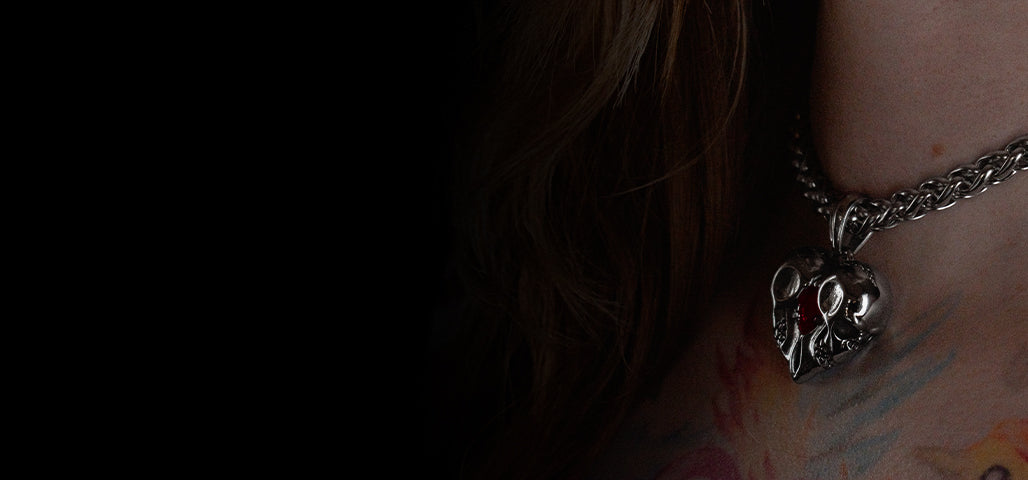
Das zentrale Symbol der Tradition. Der Schädel ist der direkteste visuelle Hinweis auf die Sterblichkeit überhaupt – jeder Betrachter erkennt ihn sofort, und diese Erkennung ist der Punkt. Im Memento Mori ist der Schädel nicht bedrohlich oder aggressiv; er ist lehrreich. Moderner Schädel-Schmuck reicht von kleinen detaillierten Anhängern bis zu überdimensionalen Statement-Ringen, aber die zugrunde liegende Bedeutung bleibt konsistent.
Die Sanduhr
Die ablaufende Zeit. Sanduhr-Motive im Schmuck betonen die Endlichkeit des Lebens und nicht den Tod selbst. Oft mit Schädeln oder Flügeln kombiniert, tauchten sie häufig in viktorianischen Trauerbroschen und -ringen auf. In zeitgenössischen Stücken seltener, aber es lohnt sich, sie zu erkennen, wenn man sie sieht.

Das Kreuz und Kruzifix
Im Kontext des Memento Mori trägt das Kreuz die spezifische Bedeutung von Leid und Sterblichkeit und nicht nur rein religiösen Inhalt. Mittelalterlicher und Renaissance-Andachtsschmuck kombinierte oft Kreuzbilder mit Schädeln oder Inschriften, um die Verbindung zwischen der Passion und der menschlichen Sterblichkeit zu verdeutlichen. Durchsuchen Sie unsere Kreuz- und Kruzifix-Kollektion nach Stücken in dieser Tradition.
Der Sarg und die Urne
Viktorianische spezifische Symbole, meist in Trauerbroschen und Anhängern aus dem 19. Jahrhundert zu sehen. Sarg und Urne sind in zeitgenössischen Stücken heute selten – sie wirken zu spezifisch für die viktorianische Begräbniskultur, um gut in moderne Kleidung übersetzt zu werden. Trotzdem wissenswert, wenn man antiken Trauerschmuck sammelt.
Die Rose
Rosen im Memento-Mori-Schmuck repräsentieren die Kurzlebigkeit der Schönheit – Blumen, die blühen und sterben, oft gepaart mit Schädeln, um den Kontrast deutlich zu machen. Moderner Rosen-Schmuck in der Gothic-Tradition greift oft diese duale Symbolik auf, auch wenn der explizite Memento-Mori-Rahmen nicht genannt wird.
Die Schlange
Die Schlange hat einen komplizierteren Platz in der Memento-Mori-Symbolik. Manchmal repräsentiert sie die Ewigkeit (der Ouroboros, eine Schlange, die sich in den Schwanz beißt), manchmal den Sündenfall und die menschliche Sterblichkeit. Im viktorianischen Trauerschmuck standen Schlangenringe – Königin Victorias eigener Verlobungsring war eine Schlange – für ewige Liebe und Erinnerung. Sehen Sie sich unsere Schlangen-Schmuckstücke für moderne Stücke in dieser Tradition an.
Memento Mori vs. generischer "Schmuck mit Totenköpfen"
Nicht jeder Schmuck mit Totenköpfen ist Memento-Mori-Schmuck, und der Unterschied ist wichtig, wenn man Wert auf die Tradition legt.
Die Totenkopf-Bildsprache in der Mode existiert in verschiedenen Traditionen. Piraten-Totenköpfe, Biker-Totenköpfe, Sugar Skulls (aus der mexikanischen Tag der Toten-Tradition, die sich unterscheidet), Halloween-Totenköpfe – all diese verwenden das gleiche grundlegende visuelle Element, aber mit unterschiedlichen kulturellen Bedeutungen. Memento Mori bezieht sich spezifisch auf die europäische Andachts- und Trauertradition, mit der Bedeutung „Erinnere dich an den Tod“.
Die visuellen Unterschiede sind subtil, aber konsistent. Memento-Mori-Schädel neigen dazu, zu sein:
Realistisch statt stilisiert. Es geht um die unerschütterliche Erinnerung, nicht um ein grafisches Motiv. Cartoonhafte oder dekorative Totenköpfe wirken eher als Kostüm denn als Tradition.
Oft mit anderen Memento-Mori-Symbolen gepaart. Ein Schädel mit einer Sanduhr, einem Kreuz oder einer Inschrift verrichtet Memento-Mori-Arbeit. Ein Schädel allein mit gekreuzten Knochen verrichtet Piratenarbeit.
Als Alltagsstücke getragen, statt als Statement-Kostüm. Die viktorianische Tradition bestand darin, die Erinnerung ständig zu tragen – tägliche Trauerstücke, keine Anlasskleidung. Moderne Memento-Mori-Stücke folgen der gleichen Logik.
Drei Perspektiven auf das Tragen von Memento-Mori-Schmuck
Eleanor, Sammlerin antiken Schmucks, Edinburgh
„Ich sammle viktorianische Trauerstücke – hauptsächlich Jet, einige frühe Vulkanit, ein paar Haarlocketts. Sie zu tragen fühlt sich an, als würde ich eine Tradition am Leben erhalten. Diese Objekte wurden hergestellt, um echte Arbeit für die Menschen zu leisten, die sie trugen. Ich denke, wir haben etwas verloren, indem wir den Tod so vollständig aus dem Alltag entfernt haben. Ein Memento-Mori-Stück zu tragen ist ein kleiner Akt der Meinungsverschiedenheit damit.“
Tom, Träger von Gothic-Schmuck, Newcastle
„Ich begann vor etwa zehn Jahren mit einem schweren silbernen Totenkopfring. Damals dachte ich, es sei einfach ein Gothic-Stück. Später, als ich mich mit der Tradition befasste, änderte sich die Art, wie ich ihn trage. Ich trage ihn immer noch jeden Tag, aber ich nehme ihn jetzt anders wahr – er erfüllt die Aufgabe, für die er ursprünglich entworfen wurde, nämlich die Sterblichkeit im Auge zu behalten. Das klingt schwer, aber es ist tatsächlich erdend.“
Priya, Dark Academia, Oxford
„Mein Memento-Mori-Stück ist ein kleines Silberkreuz mit einem Totenkopf an der Basis – es basiert auf einem Andachtsring-Design aus dem 17. Jahrhundert. Ich bin nicht religiös, aber ich finde die Tradition selbst bedeutungsvoll. Es gibt eine lange Geschichte von Menschen, die diese Fragen ernst nehmen und Erinnerungen tragen. Es platziert mich in dieser Geschichte, wenn auch nur lose.“
Wie man ein Memento-Mori-Stück auswählt
Wenn Sie ein Stück wünschen, das die Tradition ehrt, anstatt nur ihre Bildsprache zu übernehmen, helfen einige praktische Prinzipien.
Wählen Sie Realismus statt Stilisierung
Suchen Sie nach Schädeln und anderen Symbolen mit anatomischen Details statt vereinfachten oder grafischen Formen. Der Realismus ist wichtig, weil er die ursprüngliche Absicht trägt – eine ehrliche Erinnerung statt ein dekoratives Motiv. Detaillierte Silber- oder Goldstücke eignen sich in dieser Tradition am besten.
Berücksichtigen Sie die Symbolkombination
Stücke, die mehrere Memento-Mori-Symbole kombinieren – Schädel mit Kreuz, Schädel mit Rose, Schädel mit Sanduhr – tragen die Tradition deutlicher als Einzel-Symbol-Stücke. Ein kleiner Schädel mit einem winzigen Kreuz daneben leistet mehr symbolische Arbeit als ein viel größerer Schädel allein.
Denken Sie an den täglichen Gebrauch
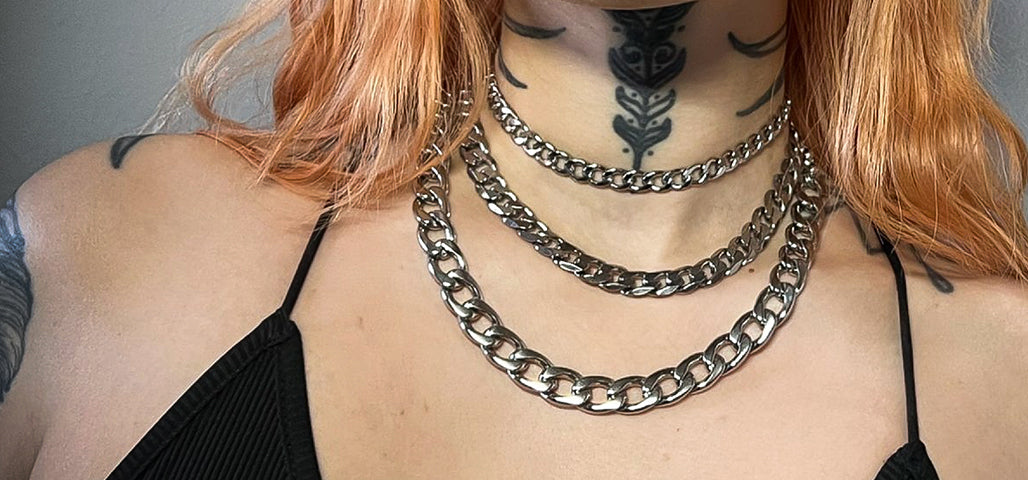
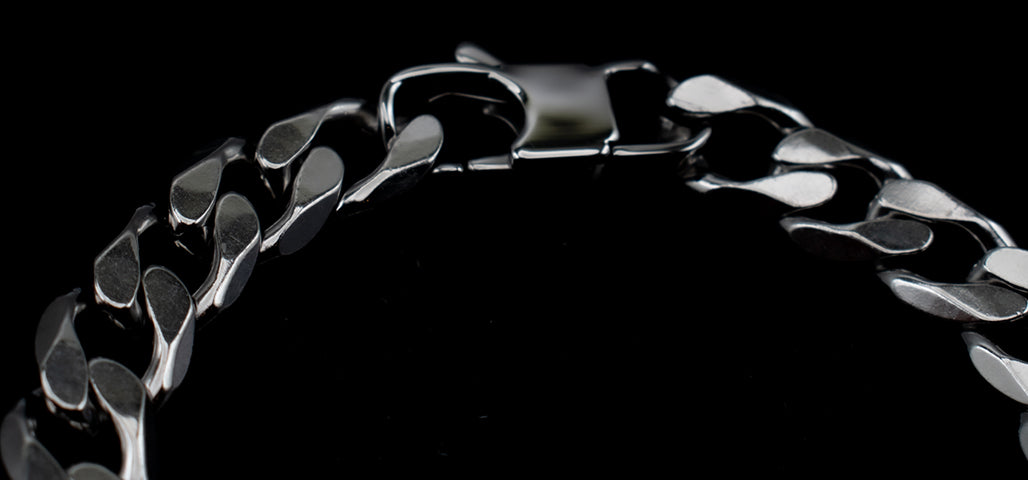
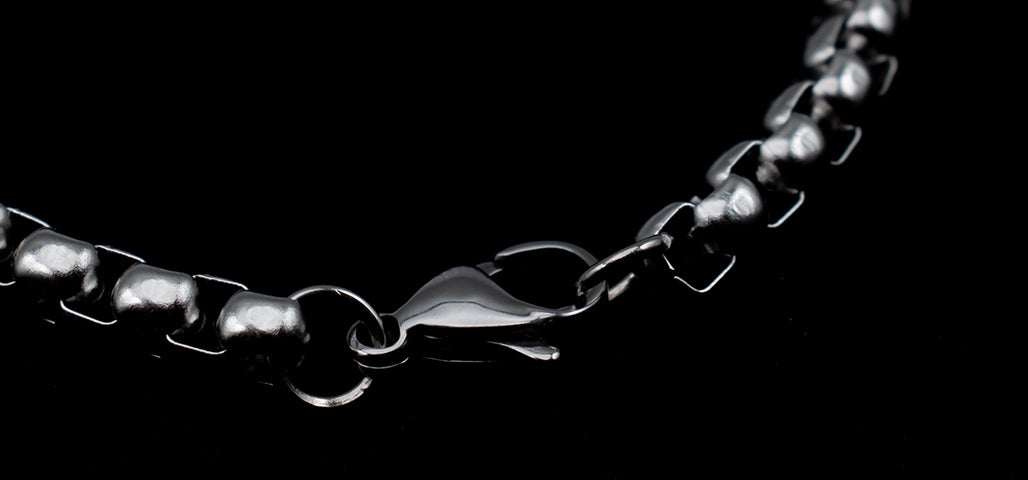
Memento Mori ist eine Tradition der täglichen Erinnerung. Die Stücke wirken am besten, wenn sie klein oder substanziell genug sind, um ständig getragen zu werden, anstatt für besondere Anlässe reserviert zu sein. Ein tragbarer Ring, ein Anhänger an einer Kette, in der Sie schlafen können, ein Ohrring, den Sie einmal anlegen und vergessen – diese erfüllen die Tradition richtig. Alle unsere Stücke werden aus 316L-Edelstahl oder 18 Karat vergoldetem Edelstahl gefertigt, beides nicht anlaufend und wasserfest, sodass der tägliche Gebrauch sie nicht beeinträchtigt.
Das Material ist weniger wichtig, als Sie denken
Die viktorianische Tradition verwendete Jet, Vulkanit und Onyx, aber die zugrunde liegende Absicht erfordert kein bestimmtes Material. Silber, Gold, Edelstahl oder dunklere Oberflächen funktionieren alle – die Bedeutung liegt im Symbol und im Tragen, nicht im Metall. Wählen Sie, was Sie tatsächlich täglich tragen werden.

Wo man anfängt
Memento Mori ist keine Kostümästhetik. Die Stücke wirken, weil sie sich auf eine echte Tradition mit echtem ethischem Inhalt beziehen – dieselbe Absicht, die römische Generäle, mittelalterliche Gläubige und viktorianische Trauernde dazu trieb, ähnliche Objekte zu tragen. Moderne Träger, die diese Tradition aufgreifen, reihen sich in eine lange Linie ein.
Wenn Sie anfangen, suchen Sie nach einem einzelnen Stück, das Sie täglich tragen werden – einen detaillierten Totenkopfring, einen kleinen Kreuz-und-Totenkopf-Anhänger, einen Schlangenring in viktorianischer Tradition. Bauen Sie langsam auf. Die Stücke sammeln mit der Zeit, die Sie sie tragen, an Bedeutung, was selbst Teil der Funktionsweise von Memento Mori ist.
Durchstöbern Sie unser Sortiment an Totenkopfschmuck, unsere Kreuz- und Kruzifix-Stücke und die breitere Gothic-Schmuckkollektion, um zu beginnen. Für weitere Informationen zur umfassenderen Tradition, lesen Sie unseren Modernen Leitfaden für Gothic-Schmuck.